
The Road to Recovery & Current Progress
$1.6B+ Damaged property loss
20+ Neighborhoods
48,000+ Individuals in zone
23,000+ Occupied housing units
5,000+ Damaged structures
1M+ Metric-tons of debris
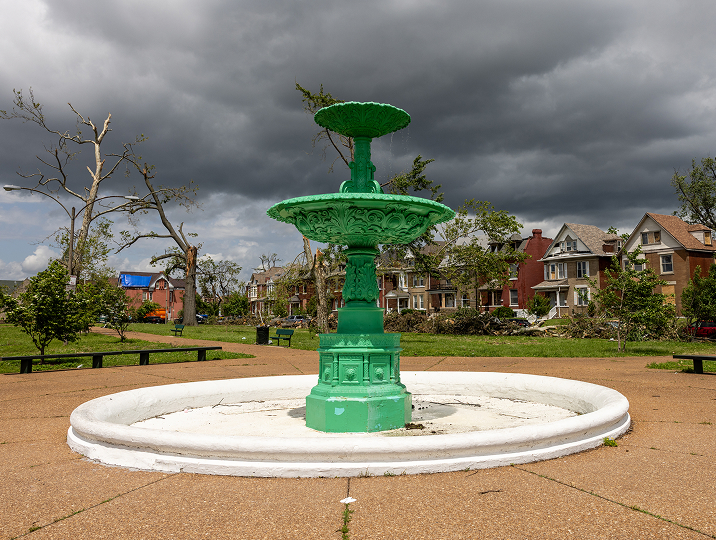
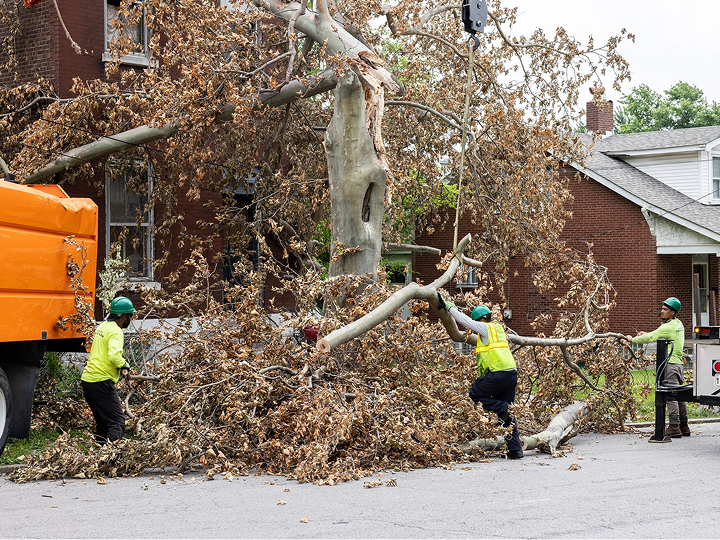
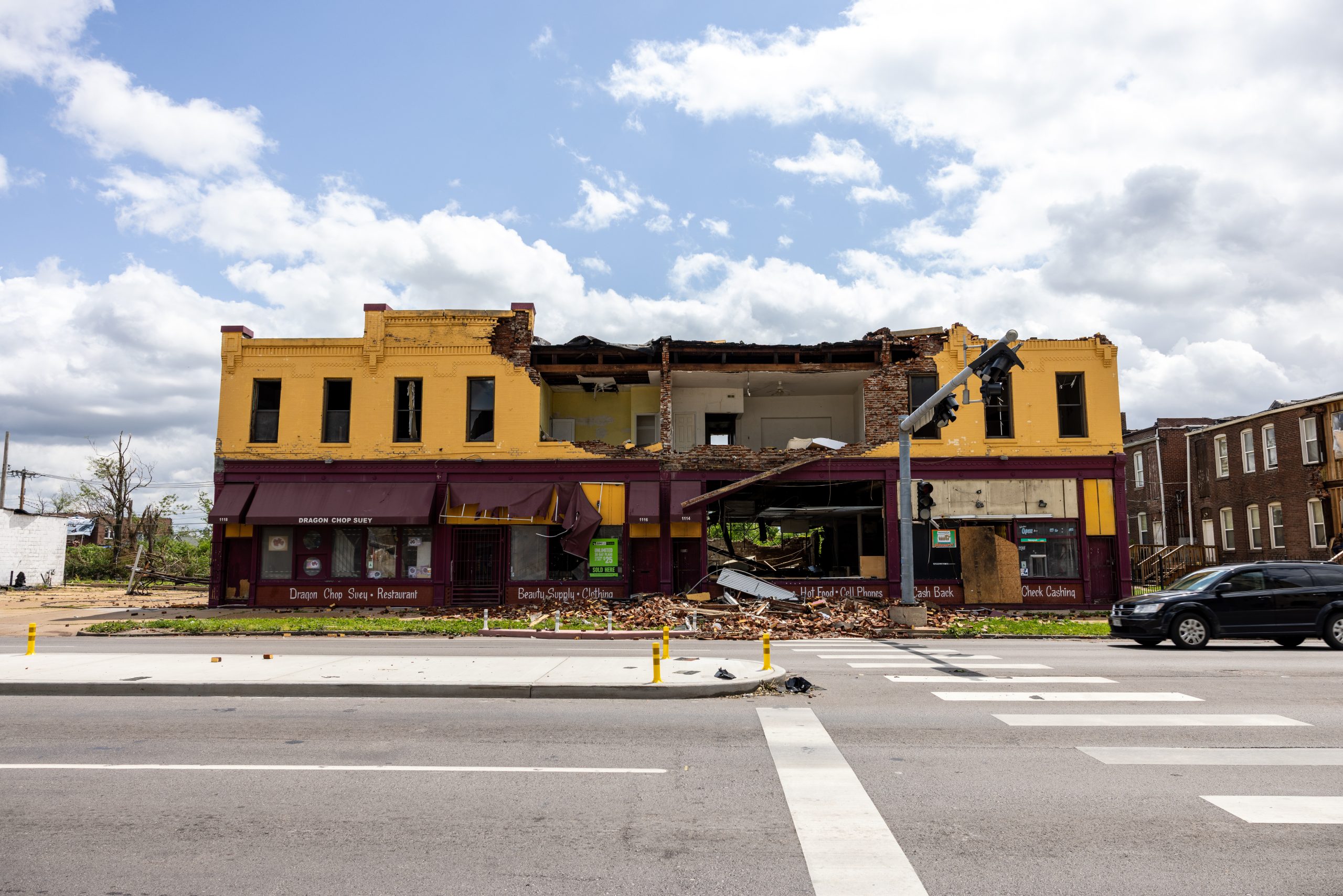
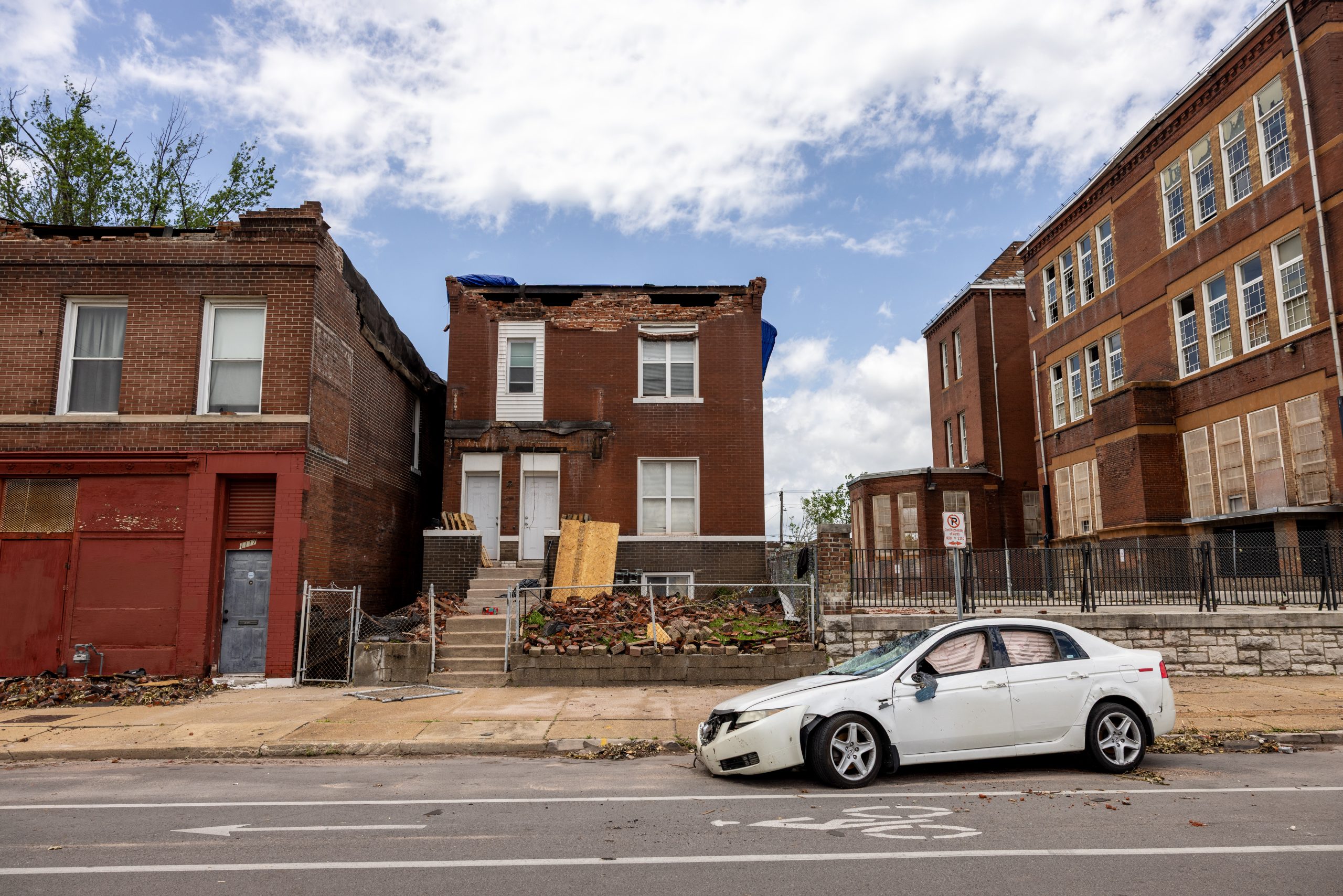
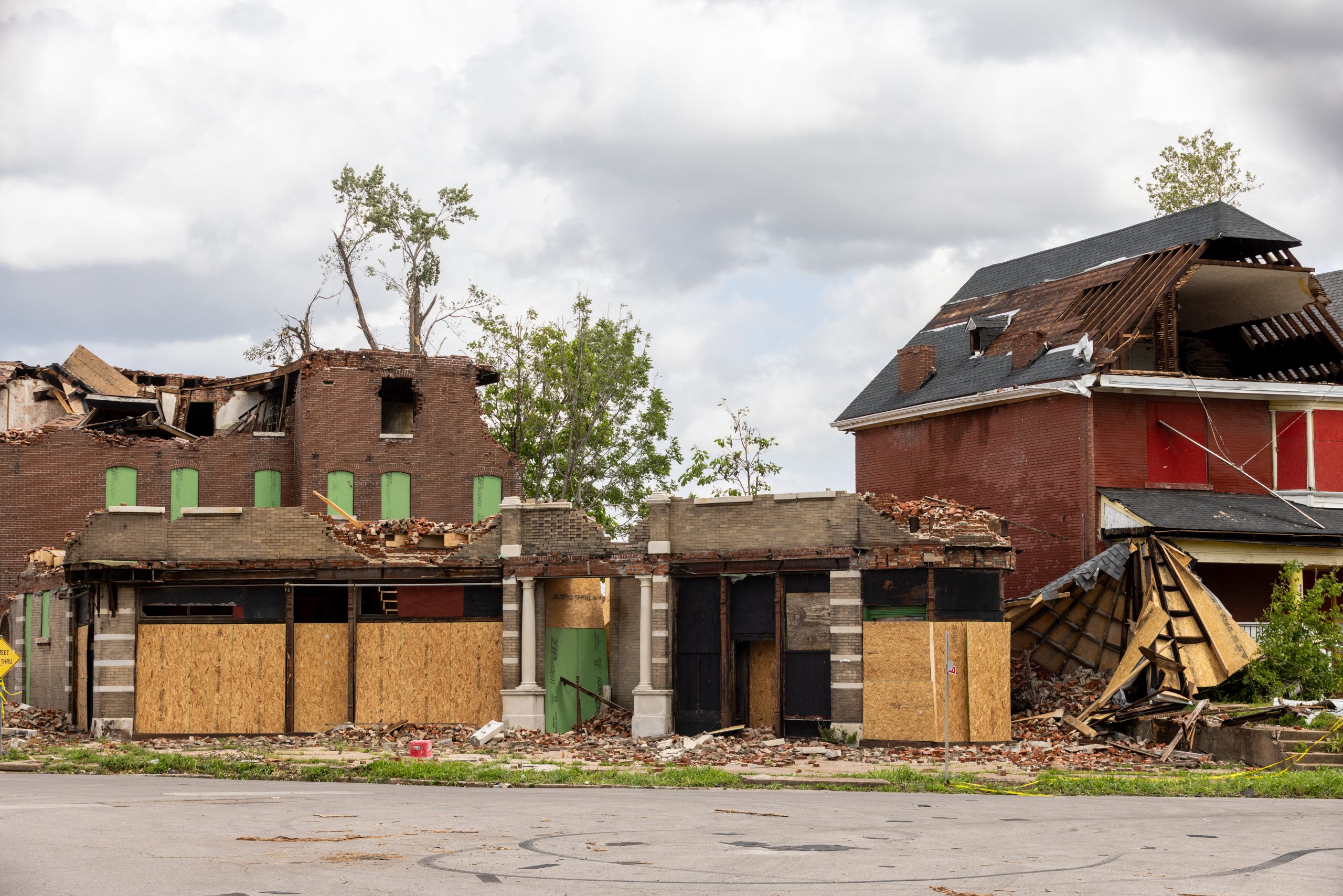
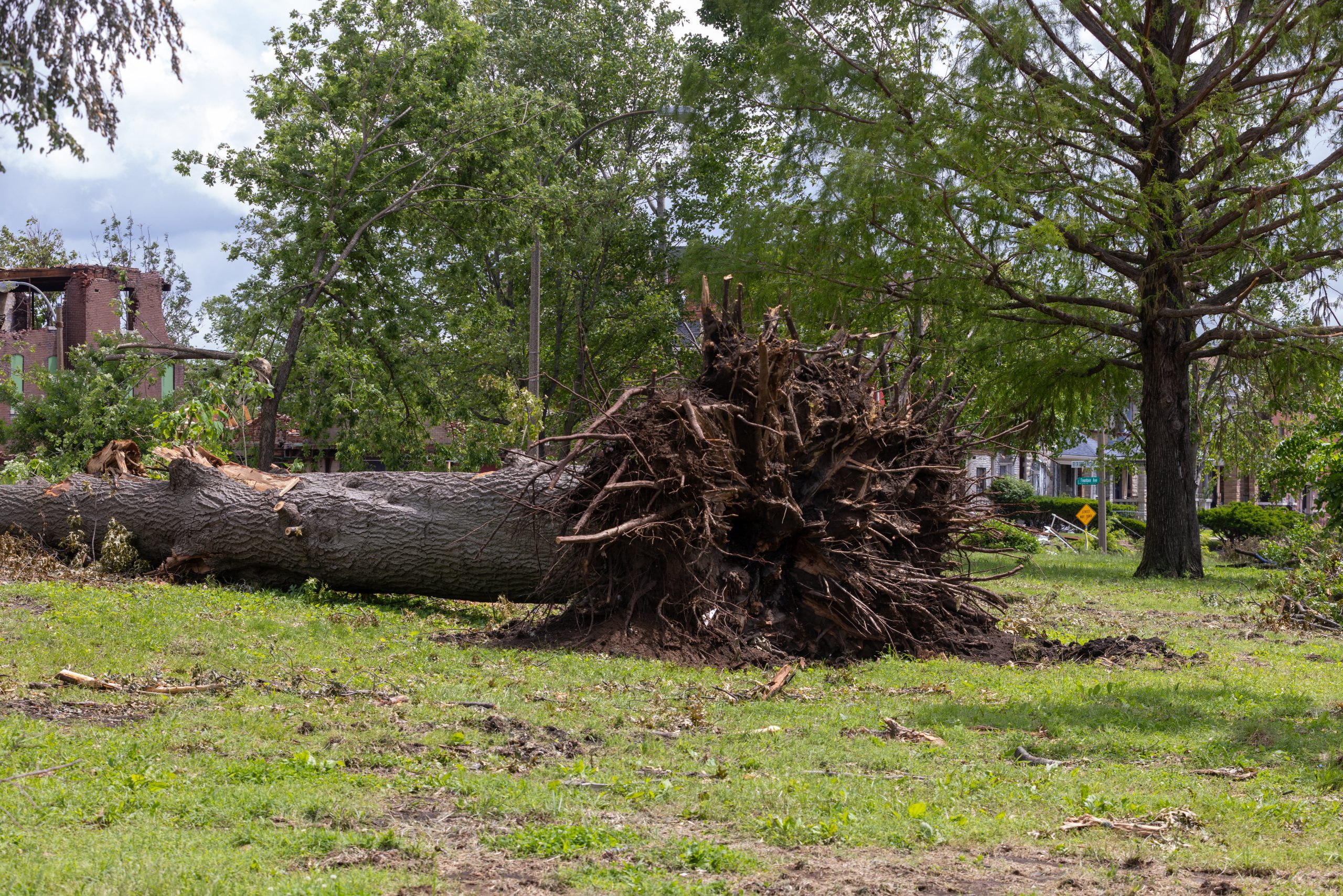
Recovery is moving through several phases as St. Louis responds to immediate needs, restores stability, and plans for long-term rebuilding across tornado-impacted neighborhoods.
PHASE 1: RESPOND
May–July 2025
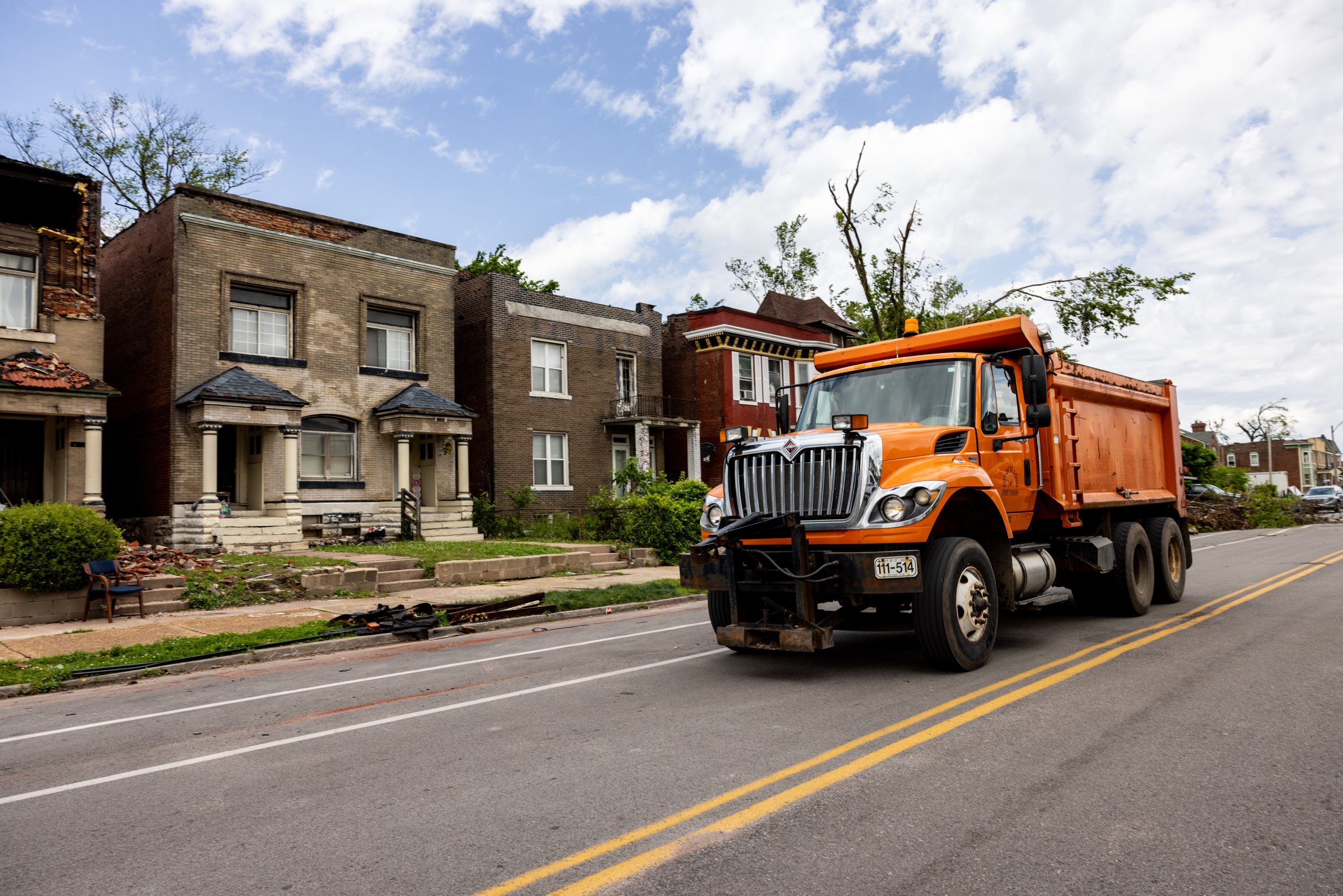
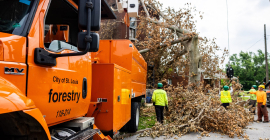
The tornado caused severe damage across multiple neighborhoods. Emergency teams cleared roads, restored essential services, and began initial debris removal to stabilize impacted areas. Early assessments documented damage to homes, businesses, and infrastructure and helped identify priority areas for recovery.
Additional actions included:

PHASE 2: RESTORE
2025–2027
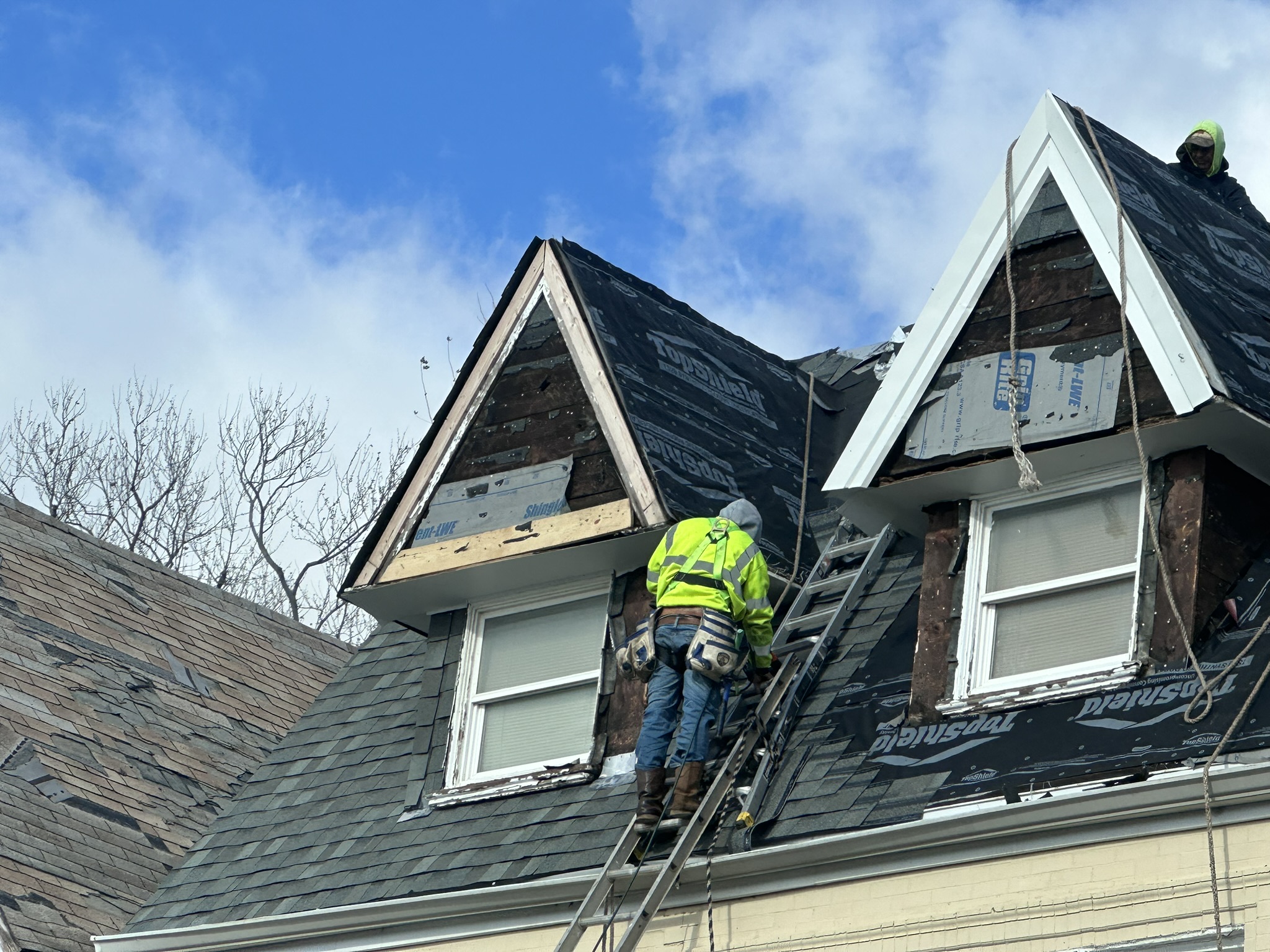
Recovery efforts are focused on helping residents safely return home while stabilizing damaged properties and neighborhoods.
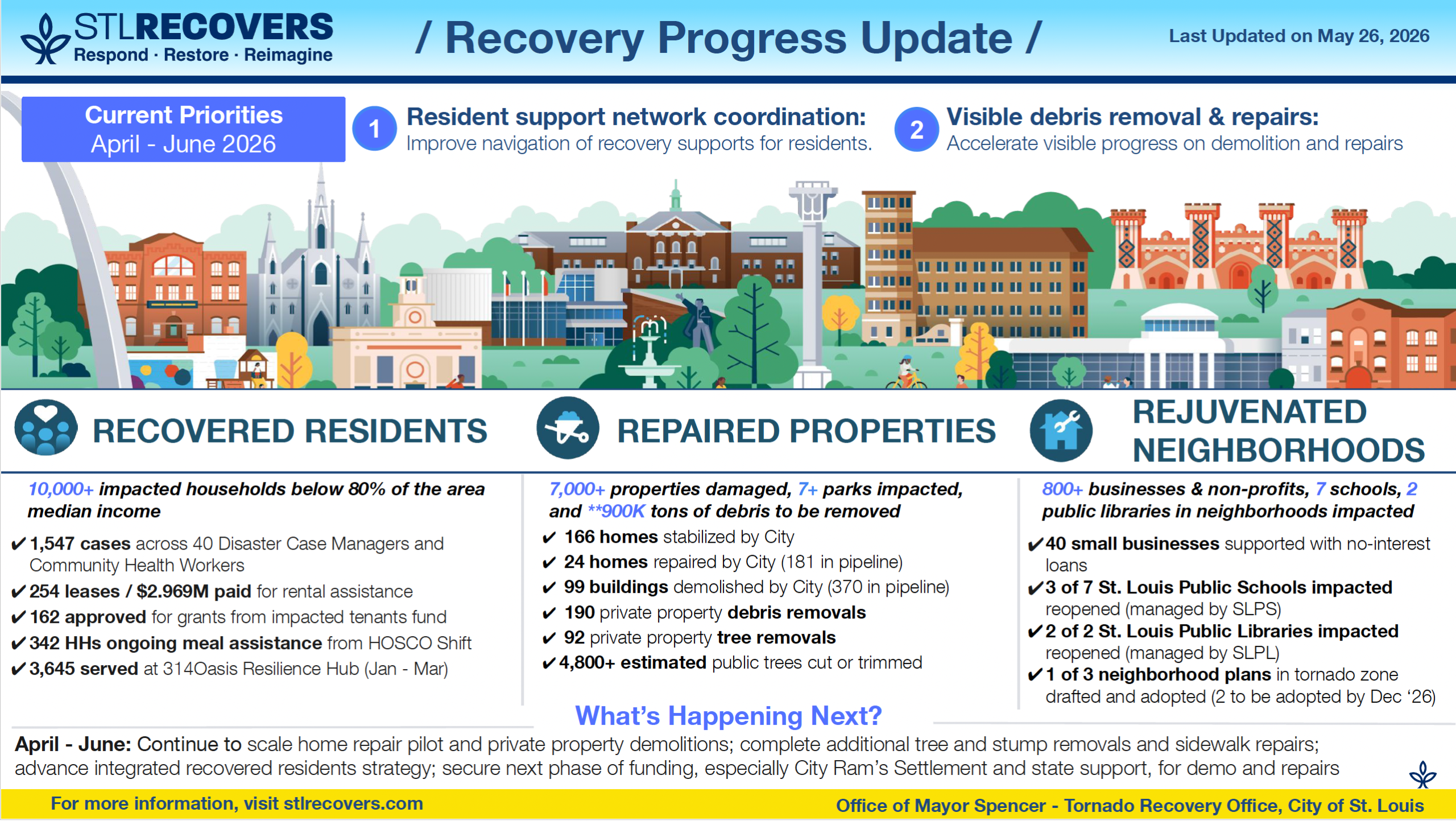
Download the latest monthly snapshot of tornado recovery efforts and progress.
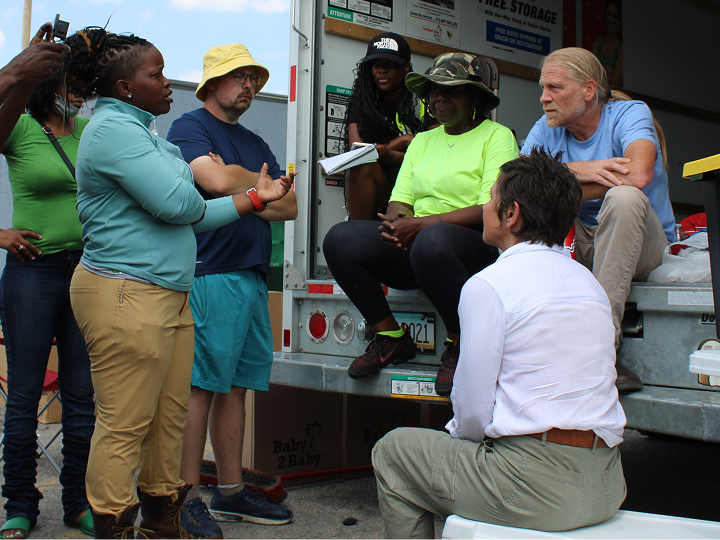
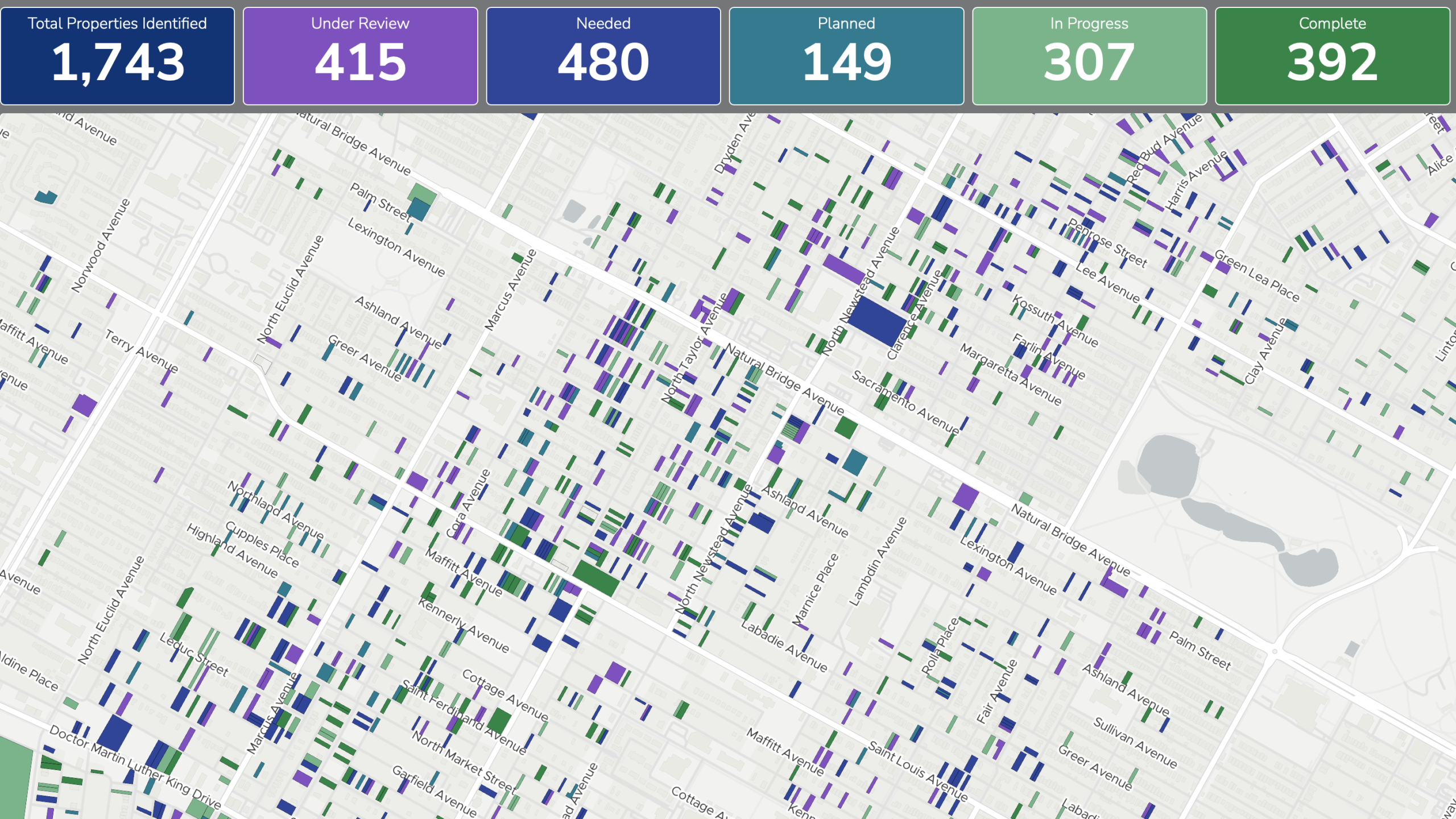
With thousands of residents signed up for private property debris removal, home repair, and demolition, our recovery efforts are ramping up! Take a look at what's happening with demolition and home repair through our online progress trackers.
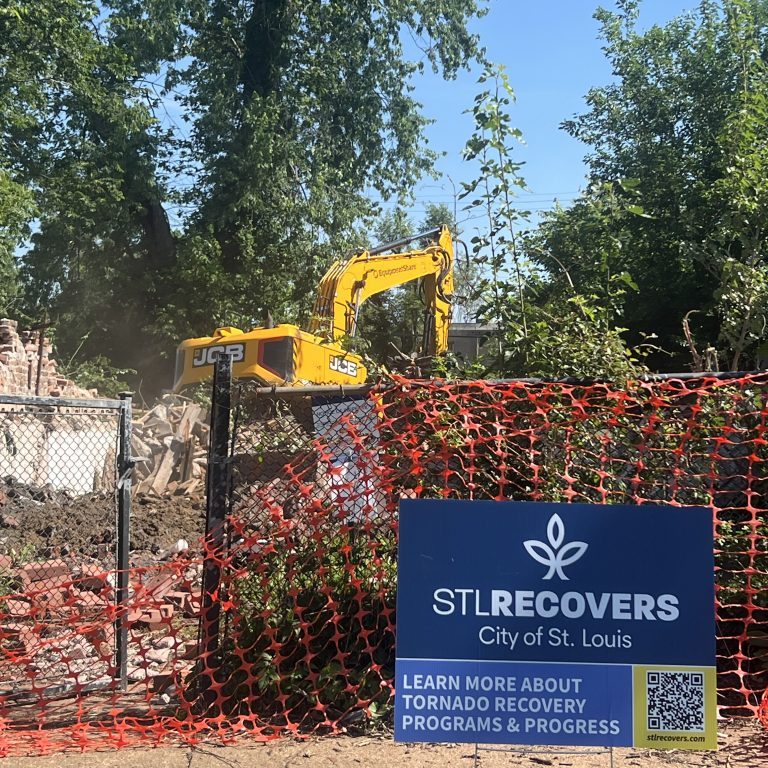
As our crews work to safely remove these buildings, we want to prepare residents for temporary impacts like noise, dust, street closures, and increased truck traffic in affected neighborhoods. Visit the City Government site to understand health impacts and precautions to be aware of during the demolition of buildings.

The City of St. Louis wants tornado-impacted residents to be able to live in a home that is safe, sanitary, and functional. The home repair program is intended to be a step toward recovery for eligible residents.
This program is unique, and has been created by the City specifically to address tornado-damaged homes in North St. Louis. These FAQs will be updated as new questions become available.
To be eligible for the program, you must be the property owner, your property must have been damaged by the tornado, you must have been the property owner at the time of the tornado, and you must have applied to the program by the cut-off date (February 28, 2026).
The City’s goal is to make each house safe, sanitary, and functional. The exact dollar amount varies house to house, as different houses may require different work to achieve that goal. Each house will receive a maximum of $50,000 of work, but many houses do not require the full amount to make the home safe, sanitary, and functional.
Safe: The exterior (roof, doors, windows) are secure and ensure safe access to two entrances, the interior of the building is safe and usable, the building is weather tight to prevent water from entering the home, visible water damage and mold is addressed.
Sanitary: The home is free from health hazards (lead paint, asbestos, radon, etc.), and water, sewer, or septic systems work the right way.
Functional: Essential utilities like electricity, gas, and water operate properly and the home’s bathroom and kitchen work correctly.
No, residents may not stay in the house while repairs are being done. Residents will have ample time to remove any belongings they don’t wish to leave behind and they will sign paperwork giving workers permission to enter their home. If a resident does not wish to leave the home or does not sign paperwork allowing work to begin, then no member of the contractor team will enter the property.
Residents who agree to the program should not return to the property while under construction unless agreed to by the contractor. This is a safety measure and residents who violate this agreement may be removed from the program.
Some residents may qualify for temporary relocation or moving assistance.
Once a contractor says they have completed work on a home, City of St. Louis officials will inspect the work. If the work does not meet quality standards, the contractors will be asked to fix the work. Before any home repair is considered finished, the home owner will be asked to sign paperwork acknowledging that the repairs stated in scope are complete and meet program standards.
Most homes will not be fully repaired through the program. The program is one step on the road to recovery and we anticipate that additional work may be desired (eg: painting, fixtures, updates). However, after completing the program, the home will be safe, sanitary, and functional.
The City has approved approximately 200 homes and has begun working through that list. Approved home owners have been notified. We expect to announce additional details in October about the next phase of the program, including timing and how homes on the waiting list will be considered.
More information, including samples of what residents in the program are asked to sign, will be provided soon.
PHASE 3: REIMAGINE
2027 & BEYOND
Long-term recovery will focus on rebuilding stronger neighborhoods and restoring economic activity across impacted areas.
Future work will include:
Planning Area 1
The Ville, Greater Ville, & Kingsway East
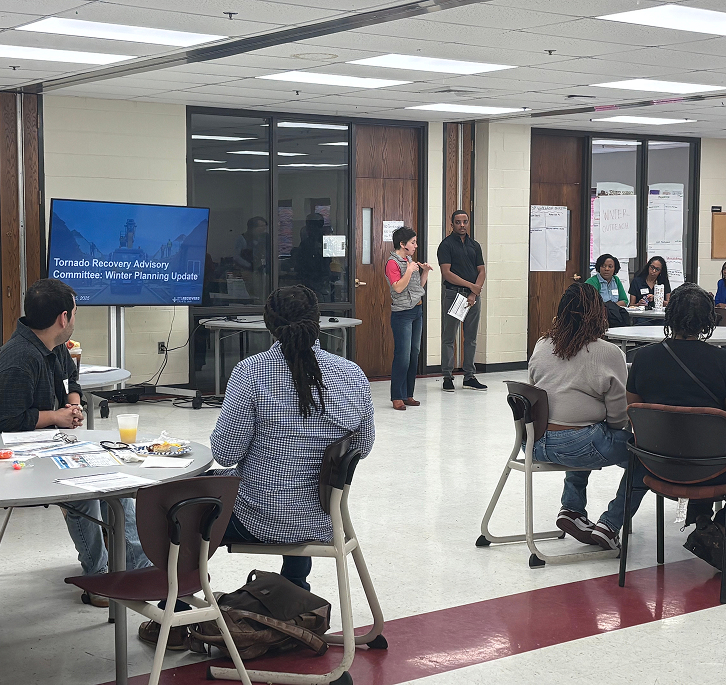
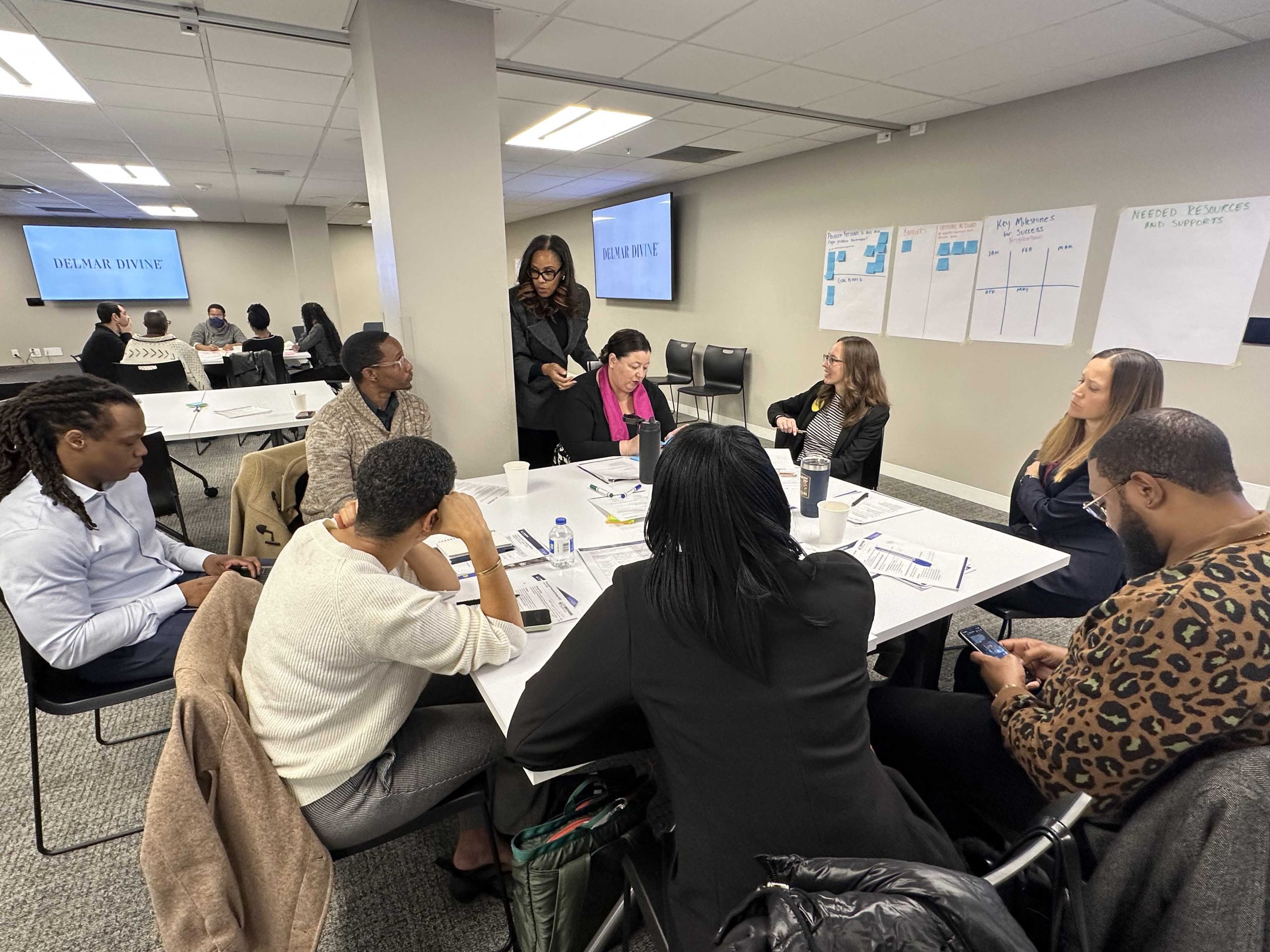
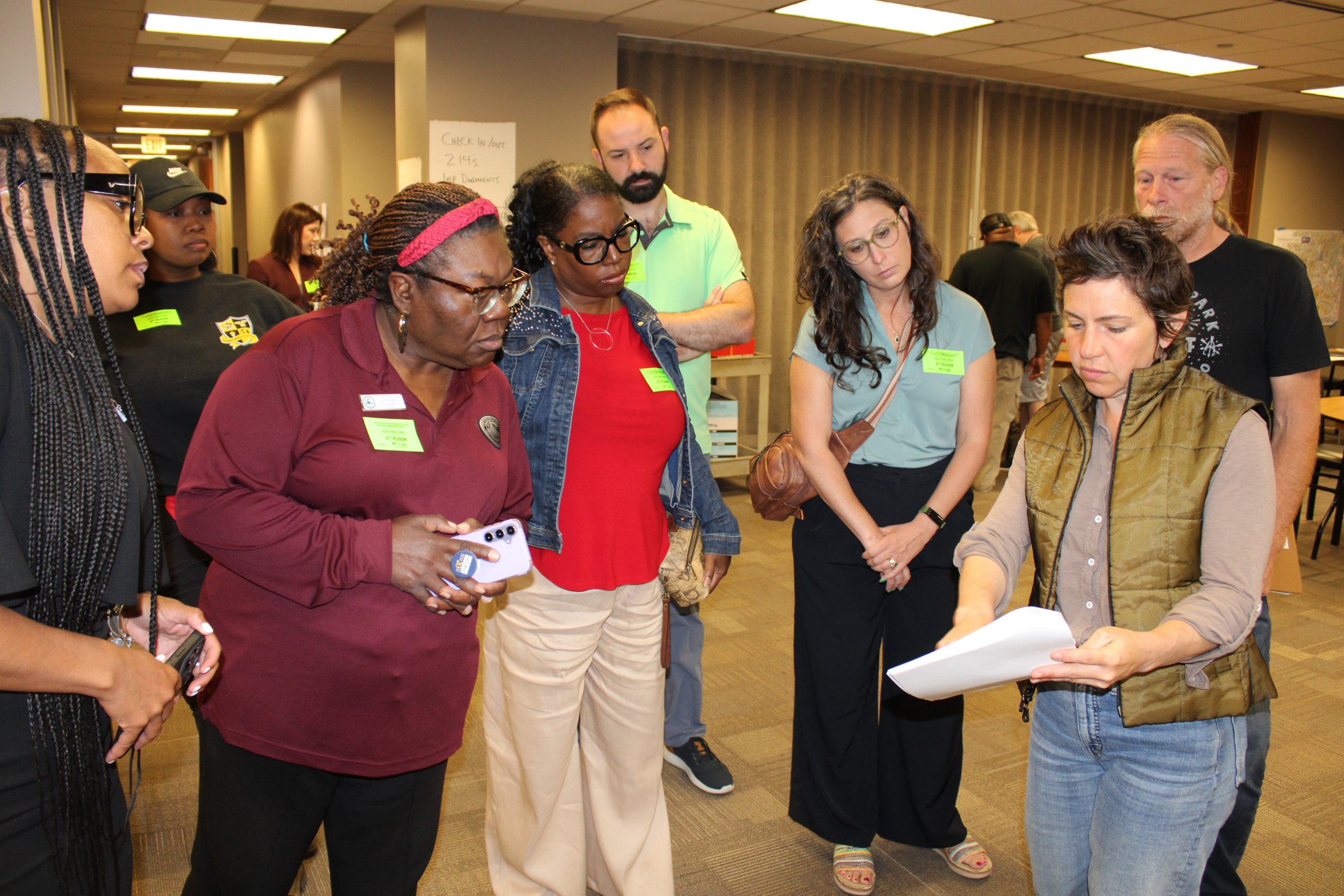
The Planning Commission adopted Stronger Northside: Neighborhood Plan for The Ville, Greater Ville, and Kingsway East at the December 17th meeting. This plan was co-created with residents, rooted in their vision for strong, connected neighborhoods where current and future generations can thrive.
Planning Area 4
Hamilton Heights, Wells-Goodfellow, Kingsway West, O’Fallon, Penrose, College Hill, & Fairground
Geographic boundaries include a western portion near Skinker Parkway, extending to Page Avenue and Natural Bridge Road. On the eastern end, the area stretches from Natural Bridge Avenue to Glasgow Avenue, and from Ferry Street to I-70.
Planning Area 5
Panning just over one square mile and are home to 4,789 residents, these neighborhoods are rich in history and distinctive architecture. Together, these neighborhoods reflect the St. Louis’s evolving social and cultural landscape while preserving their unique character.